Acne can be frustrating because it rarely has just one cause.
You can change your skincare routine, eat what you consider a healthy diet, get more sleep and still wake up with a new breakout.
That's because acne is a complex skin condition influenced by multiple factors, including hormones, oil production, clogged pores, inflammation, genetics, lifestyle and skincare.
This is why taking a holistic approach to acne can be useful.
A holistic approach doesn't mean ignoring evidence-based acne treatments or assuming that one food, supplement or skincare ingredient will magically clear your skin. Instead, it means looking at the bigger picture - your skincare routine, diet, stress, sleep, hormones, exercise and the products that come into contact with your skin.
In this guide, we'll look at practical ways to support acne-prone skin naturally, where skincare fits into a holistic acne routine, and what the latest guidance tells us about diet and lifestyle.
What Does a Holistic Approach to Acne Mean?
Holistic acne care means looking beyond the individual pimple.
Instead of asking only:
“What can I put on this breakout?”
you can also consider:
- What does my everyday skincare routine look like?
- Am I over-exfoliating or irritating my skin?
- Could my haircare products be transferring onto my skin?
- How is my diet overall?
- Am I getting enough sleep?
- Is stress affecting my routine?
- Are hormonal changes contributing to my breakouts?
- Am I exercising and sweating regularly?
- Am I using products that are appropriate for my skin type?
This doesn't mean every lifestyle factor causes acne.
It simply recognises that acne is multifactorial and that your overall routine can influence how your skin looks and feels.
Importantly, holistic skincare should complement - not replace - appropriate medical care.
The American Academy of Dermatology's current acne guidance supports evidence-based topical and oral treatments for acne, while noting that there isn't enough evidence to make recommendations for dietary changes or many alternative therapies as acne treatments.

1. Start With Your Skin Barrier
One of the biggest mistakes people with acne-prone skin can make is assuming that acne needs to be aggressively scrubbed, dried out or stripped away.
It's understandable.
When you see oil, congestion and breakouts, reaching for stronger cleansers, exfoliating acids, scrubs and multiple acne treatments can feel like the logical solution.
But more isn't necessarily better.
Dermatologists recommend gentle cleansing and avoiding skincare habits that unnecessarily irritate the skin. Using too many products or constantly changing acne treatments can make irritation worse.
What does a skin-friendly acne routine look like?
Consider keeping your routine simple and consistent.
A basic routine may include:
- A gentle cleanser
- A lightweight moisturiser
- Daily sun protection
- Targeted acne actives where appropriate
- Minimal unnecessary exfoliation
- Products that suit your individual skin
If your skin is both acne-prone and sensitive, maintaining comfort and hydration can be particularly important.
At AMPERNA®, we take a skin microbiome-conscious approach to skincare, creating products for people who want to support their skin without unnecessarily complicated routines.
Our AMPERNA® Acne Plus Bundle is a great place to start.
The bundle brings together some of our most popular products for acne-prone skin, giving you a more complete AMPERNA® routine rather than relying on a single product.
Shop the AMPERNA® Acne Plus Bundle
As always, patch test before introducing new skincare, particularly if your skin is sensitive or reactive.
2. Look at Your Diet
Diet is one of the most searched topics when it comes to holistic acne care.
And while you may see dramatic claims online about “acne-causing foods”, the scientific evidence is more nuanced.
Research has investigated the relationship between acne and high-glycaemic diets, dairy and overall dietary patterns.
The American Academy of Dermatology notes that small studies suggest a low-glycaemic diet may be associated with fewer pimples, although more research is needed.
This doesn't mean you need to eliminate sugar, dairy, gluten or entire food groups.
Instead, consider your overall dietary pattern.
Focus on dietary variety
A balanced diet can include:
- Vegetables
- Whole fruits
- Legumes
- Whole grains
- Nuts and seeds
- Fish
- Healthy fats
- Adequate protein
- Plenty of fibre
You can read more about this in our guide:
The Best Diet for Acne: Foods to Eat and Foods to Limit

3. Don't Ignore Your Gut - But Don't Blame It for Everything
The gut-skin connection has become one of the biggest areas of interest in skincare and dermatology.
Your gut microbiome and skin microbiome are complex ecosystems, and researchers are continuing to investigate how the gut, immune system, metabolism and skin may interact.
However, it's important not to turn this into another oversimplified skincare trend.
Having bloating doesn't automatically mean your gut is causing your acne.
And taking a probiotic supplement isn't a guaranteed solution for breakouts.
Instead, focus on the fundamentals.
Eating a varied, fibre-rich diet and including a range of plant foods can support overall dietary quality and gut health.
If you've recently taken antibiotics, you may also be interested in our guide to Antibiotics & Gut Health.
4. Understand Your Hormonal Acne Triggers
Hormones can play an important role in acne, particularly in adults.
Some people notice breakouts appearing or worsening around hormonal changes, often around the:
- Chin
- Jawline
- Lower face
- Neck
Hormonal acne can also occur during different stages of life, including adolescence, adulthood and periods of hormonal change.
If your acne is persistent or follows a noticeable hormonal pattern, it may be worth discussing it with your doctor or dermatologist.
Don't assume that every breakout around your jawline is automatically “hormonal acne” - acne can have multiple contributing factors.
5. Manage Stress Without Blaming Yourself
“Just reduce your stress” is not particularly helpful advice when you're already frustrated by your skin.
However, stress is worth considering as part of your overall wellbeing.
Research suggests that stress can influence inflammatory pathways and may contribute to worsening acne for some people.
But this doesn't mean your acne is your fault because you're stressed.
Instead, think about stress management as another way of supporting your overall health.
You might try:
- Walking
- Exercise you enjoy
- Meditation
- Deep breathing
- Spending time outside
- Reading
- Limiting screen time before bed
- Making time for friends and family
- Getting consistent sleep
You don't need a perfect wellness routine.
Small, sustainable habits are much more realistic.
6. Prioritise Sleep
Sleep is another part of holistic skin health that is often overlooked.
If you're consistently sleeping poorly, you may also notice changes in your energy, stress levels, eating habits and general wellbeing.
Rather than obsessing over getting a perfect number of hours every night, focus on creating a consistent sleep routine.
Try:
- Going to bed around the same time
- Keeping your bedroom cool and dark
- Limiting caffeine later in the day
- Reducing screen time before bed
- Creating a relaxing bedtime routine
Sleep isn't an acne treatment, but supporting your overall wellbeing can be part of a more balanced approach to managing acne-prone skin.

7. Think About Sweat, Exercise and Acne Mechanica
Exercise is good for your health, but sweat, friction and occlusive clothing can sometimes contribute to breakouts.
This is particularly relevant if you notice spots appearing where clothing, helmets, sports equipment, backpacks or other items repeatedly rub against your skin.
This is sometimes referred to as acne mechanica.
If you exercise regularly:
- Change out of sweaty clothing when possible
- Shower after exercising
- Avoid repeatedly touching your face
- Clean equipment that comes into contact with your skin
- Wash workout clothing regularly
- Choose breathable fabrics where practical
- Avoid unnecessary friction
Your gym routine doesn't need to stop because you have acne.
It may simply be worth looking at what happens to your skin before, during and after exercise.
8. Don't Forget Your Haircare
Your skincare routine isn't the only routine that comes into contact with your skin.
Shampoo, conditioner, dry shampoo, oils, styling products and hairspray can transfer onto areas such as your:
- Forehead
- Hairline
- Ears
- Neck
- Shoulders
- Back
If you're experiencing breakouts around your hairline, forehead, neck or back, your haircare routine may be worth reviewing.
Try rinsing shampoo and conditioner thoroughly and keeping styling products away from your face and neck where possible.
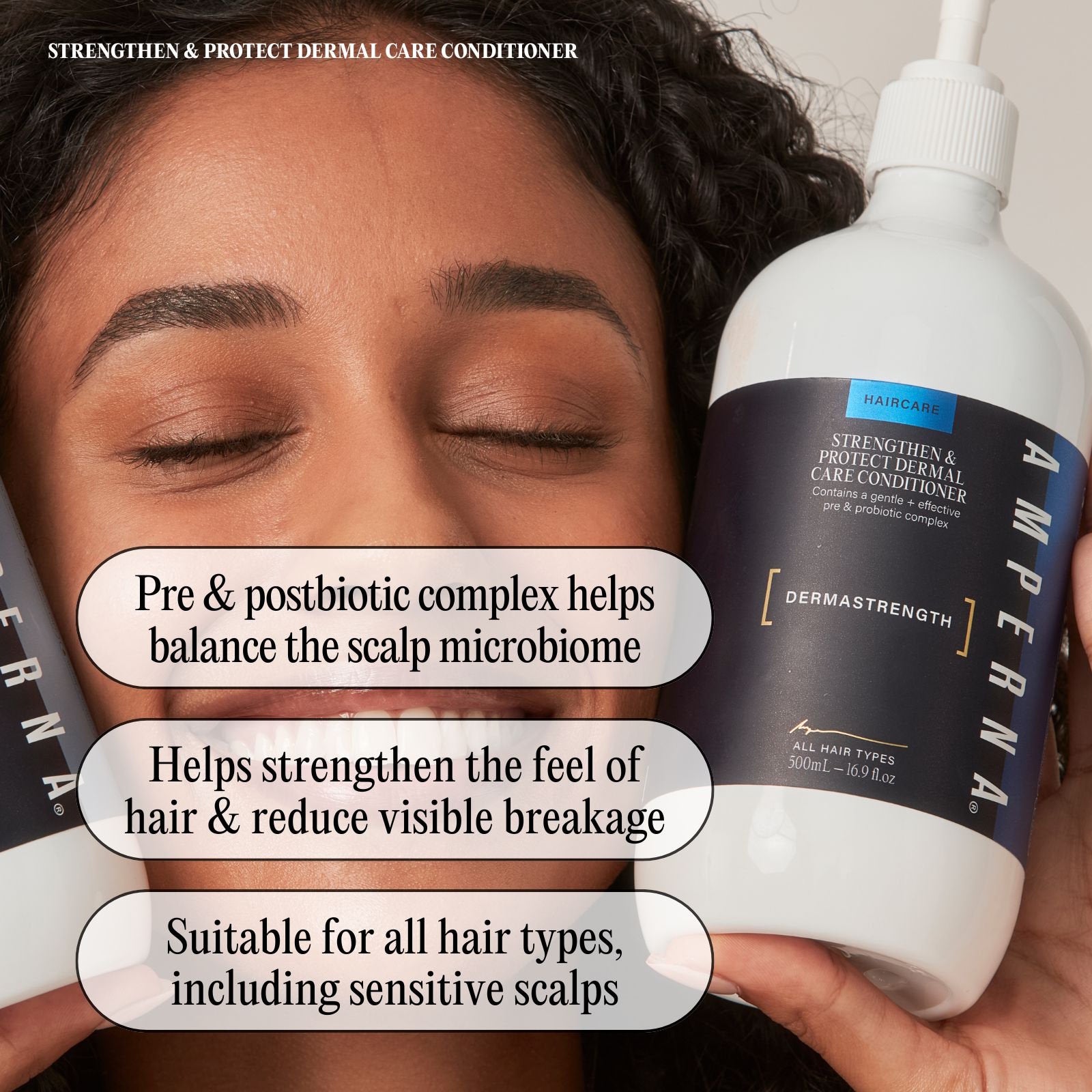
Try AMPERNA® Haircare
At AMPERNA®, we believe haircare and skincare shouldn't be treated as completely separate.
Our Dermal Care Haircare range has been developed with your hair and scalp in mind, while also considering the skin that surrounds them.
If you're already thinking about a more holistic approach to your skincare routine, extending that thinking to your haircare makes sense.
You can also read our guide to Haircare and Sensitive Skin.
9. Consider Your Bodycare Routine Too
Acne isn't always limited to the face.
Some people experience breakouts or congestion across the:
- Chest
- Back
- Shoulders
- Neck
Sweat, friction, haircare products and occlusive clothing can all contribute to the environment around the skin.
Your bodycare routine is therefore another area worth reviewing.
AMPERNA® Body Care
AMPERNA® Body Care was created to provide a simple, gentle approach to cleansing and hydrating the body.
Our Hydrating Gentle Wash with Ceramides and Hydrating Gentle Body Lotion with Ceramides can form part of an everyday bodycare routine, particularly when you don't want to overload your skin with unnecessary products.
10. Don't Overload Your Skin With Actives
One of the most common mistakes when trying to manage acne is introducing too many active ingredients at once.
You might use:
- Retinol
- Salicylic acid
- Glycolic acid
- Benzoyl peroxide
- Vitamin C
- Scrubs
- Masks
- Spot treatments
And then wonder why your skin feels irritated.
Acne treatments can be effective, but they need to be used appropriately.
Current dermatology guidance supports several topical acne treatments, including retinoids, benzoyl peroxide, salicylic acid and azelaic acid, depending on the individual and their type and severity of acne.
The key is not to assume that using more products will produce better results.
Introduce products gradually
If you're adding an active product to your routine, introduce it gradually and follow the product instructions.
If your skin becomes persistently irritated, painful or unusually reactive, stop and seek professional advice where appropriate.
11. Sun Protection Still Matters
If you're dealing with acne, you may be tempted to skip sunscreen because you're worried it will feel heavy or contribute to congestion.
But sun protection remains an important part of everyday skincare.
Sun exposure can also make post-inflammatory marks more noticeable and prolong the appearance of uneven skin tone after a breakout.
Look for a sunscreen that feels comfortable enough for you to use consistently.
AMPERNA® SPF15
The AMPERNA® Pro+ Bio Soothing Day Mineral CC SPF15 combines mineral sun protection with a tinted finish and can be incorporated into your morning routine.
Remember that SPF15 provides lower UV protection than SPF30 or SPF50, so consider your level of sun exposure and use appropriate sun-protective measures, including clothing, shade and a higher-SPF sunscreen when needed.
12. Give Your Routine Time
One of the biggest challenges with acne is patience.
You try a new product.
Nothing happens immediately.
You become frustrated.
You add another product.
Then another.
And suddenly you're using six different acne products and don't know which one is helping - or irritating your skin.
Dermatologists note that acne treatments can take several weeks to show improvement, and constantly switching products can irritate the skin.
A better approach is to introduce changes gradually and give your routine time.
This also makes it easier to identify what your skin actually tolerates.

A Holistic Acne Routine: What Could It Look Like?
A holistic approach doesn't need to be complicated.
You could think about your routine in four areas.
Inside
Focus on:
- A varied diet
- Fibre-rich foods
- Adequate hydration
- Regular meals
- Sleep
- Stress management
Outside
Focus on:
- Gentle cleansing
- Suitable moisturisation
- Appropriate acne treatments
- Sun protection
- Avoiding unnecessary irritation
Around You
Consider:
- Haircare
- Pillowcases
- Face towels
- Makeup brushes
- Gym equipment
- Hats and helmets
- Phone screens
- Clothing and friction
Professional Support
If acne is persistent, painful, severe or causing scarring, speak with a qualified healthcare professional.
You don't have to choose between a holistic approach and medical treatment.
You can use lifestyle and skincare habits to support your overall routine while getting appropriate treatment for your acne.
Where Does AMPERNA® Fit Into Holistic Acne Care?
At AMPERNA®, we don't believe acne-prone skin needs to be attacked with an endless number of harsh products.
We help people with acne-prone, sensitive and reactive skin build simple, considered skincare routines.
Our approach focuses on the skin barrier and microbiome while offering both gentle everyday products and active skincare options.
Start With the AMPERNA® Acne Plus Bundle
If acne and breakouts are your main concern, the AMPERNA® Acne Plus Bundle is a natural place to start.
It brings together products selected to support an acne-prone skincare routine, rather than expecting you to work out which individual products to combine yourself.
Shop the AMPERNA® Acne Plus Bundle
Always patch test new products before introducing them fully into your routine.
Can AMPERNA® Help With Acne?
Yes. We help people with acne-prone skin.
AMPERNA® skincare is designed with sensitive and reactive skin in mind, and many people with acne incorporate our products into their skincare routines.
Because every person's skin is different, we always suggest patch testing new products before introducing them fully into your routine.
If you have persistent, painful or severe acne, or acne that is causing scarring, we also recommend speaking with a dermatologist or healthcare professional.
Can You Manage Acne Naturally?
There is a big difference between supporting acne-prone skin naturally and claiming that acne can be cured naturally.
Lifestyle factors such as diet, sleep, stress management, exercise and gentle skincare can all form part of a healthy routine.
But acne is a complex skin condition.
For some people, lifestyle changes may not be enough on their own, and evidence-based acne treatment may be necessary.
The goal isn't to find one magic solution.
It's to understand your skin and build a routine that is realistic, consistent and appropriate for you.
The Holistic Approach to Acne Is About the Bigger Picture
Managing acne isn't always about finding a stronger product.
Sometimes it's about stepping back and looking at everything that could be influencing your skin.
Your diet.
Your hormones.
Your sleep.
Your stress.
Your exercise routine.
Your haircare.
Your body Care.
Your skincare.
And the way all of those things fit together.
A holistic approach doesn't mean abandoning proven acne treatments.
It means recognising that healthy-looking skin is influenced by more than what you put on your face.
At AMPERNA®, our philosophy has always been about understanding your skin rather than fighting against it.
If you're ready to simplify your routine and explore skincare designed with acne-prone, sensitive and reactive skin in mind, explore the AMPERNA® range.
Frequently Asked Questions About Holistic Acne Care
What is a holistic approach to acne?
A holistic approach to acne considers multiple factors that may influence your skin, including skincare, diet, sleep, stress, hormones, exercise and environmental factors. It should complement rather than replace appropriate medical acne treatment.
Can diet help acne?
Diet may influence acne for some people, particularly dietary patterns that are high in rapidly absorbed carbohydrates. However, evidence remains limited and diet alone should not be considered a proven acne treatment.
What foods are best for acne-prone skin?
A varied diet containing vegetables, whole fruit, legumes, whole grains, nuts, seeds, fish and other minimally processed foods is a sensible foundation. Lower-glycaemic dietary patterns are an area of ongoing acne research.
Does stress cause acne?
Stress doesn't necessarily cause acne on its own, but it may contribute to worsening breakouts for some people. Managing stress can therefore be one part of an overall approach to skin and general wellbeing.
Can gut health affect acne?
The gut-skin relationship is an active area of research. The gut microbiome may interact with immune and metabolic pathways relevant to skin health, but there isn't enough evidence to say that gut health is the single cause of acne or that probiotics will clear acne.
Should I stop using skincare if I have acne?
Not necessarily. Gentle skincare can be an important part of managing acne-prone skin. Dermatologists recommend gentle cleansing and avoiding irritating skincare habits that can make acne and skin discomfort worse.
Can I use AMPERNA® if I have acne?
Yes. We help people with acne-prone skin. AMPERNA® products are designed with sensitive and reactive skin in mind, and we always suggest patch testing new products before introducing them fully into your routine.
What should I do if my acne is severe?
If you have deep, painful acne, acne that is scarring, or persistent breakouts that aren't improving, speak with a dermatologist or healthcare professional. Severe acne may require medical treatment, and over-the-counter skincare alone may not be sufficient.
How long does it take to improve acne?
There isn't one timeframe that applies to everyone. Acne treatments generally require consistent use over several weeks, and repeatedly changing products can make irritation worse. Give your routine time to work unless you're experiencing a significant adverse reaction.
Sources:
https://www.healthline.com/health/what-are-blemishes
https://www.medicalnewstoday.com/articles/327503
https://www.modernholistichealth.com/best-holistic-skincare-routine/