Have you ever noticed your skin suddenly feels tight after cleansing?
Perhaps products you've used for years now sting, your skin looks red or flaky, or everything you apply seems to make your skin feel worse.
If this sounds familiar, your skin barrier may be compromised.
At AMPERNA®, one of the most common questions we receive is how to repair a damaged skin barrier. Whether your skin has been affected by over-exfoliation, harsh skincare products, environmental stress or simply doing too much, the good news is that your skin barrier can often recover with the right care.
In this guide, we'll explain what your skin barrier is, why it's so important, the signs of a damaged skin barrier and how to support healthy-looking skin with a simple, gentle routine.

What Is Your Skin Barrier?
Think of your skin barrier as your body's natural shield.
It's the outermost layer of your skin and has an important job: keeping the good things in, like moisture, and helping keep harmful environmental stressors out.
A healthy skin barrier helps to:
- Lock in hydration
- Protect against pollution and environmental irritants
- Support the skin microbiome
- Reduce moisture loss
- Help skin feel comfortable and resilient
When your skin barrier is functioning well, your skin is more likely to feel soft, hydrated and balanced.
It’s the weakening of this skin shield that is the underlying cause of sensitive skin. A thin, weak, or damaged skin barrier allows irritants in, or irritates more easily.
If your skin barrier is damaged, then that is when you can experience redness, irritation, breakouts, rashes, burning sensations, broken capillaries, dryness, tightness, and other symptoms you’d attribute to having sensitive skin.
Why Is Your Skin Barrier So Important?
Your skin barrier does much more than simply protect the surface of your skin.
It works alongside your skin microbiome - a community of beneficial microorganisms that naturally live on your skin - to help maintain healthy-looking skin.
A healthy skin barrier can help your skin:
- Retain moisture
- Feel less sensitive
- Better tolerate active skincare ingredients
- Recover from environmental stress
- Maintain a balanced complexion
Supporting your skin barrier is one of the most important things you can do for your overall skin health, regardless of your skin type.
Signs Your Skin Barrier May Be Damaged
Your skin has a clever way of letting you know when something isn't quite right.
Common signs of a compromised skin barrier include:
- Skin that feels tight after cleansing
- Redness
- Dryness or flaking
- Increased sensitivity
- Products that suddenly sting or burn
- Itching
- Rough texture
- Dehydrated skin
- Unexpected breakouts
- Skin that feels uncomfortable throughout the day
If several of these sound familiar, it may be time to simplify your skincare routine and focus on supporting your skin barrier.
What Causes a Damaged Skin Barrier?
There isn't one single cause.
Usually, it's the result of several factors working together.
Over-Exfoliation
One of the biggest causes of barrier damage is over-exfoliating.
Using exfoliating acids, scrubs or resurfacing products too often can weaken your skin's natural protective barrier.
Remember, more exfoliation doesn't always mean better skin.
Using Too Many Active Ingredients
It can be tempting to layer products containing retinol, vitamin C, AHAs, BHAs and exfoliating acids.
While these ingredients can have their place, using too many at once may overwhelm sensitive skin.
When introducing active ingredients, always start slowly and pay attention to how your skin responds.
Harsh Cleansers
Some cleansers remove more than just makeup and dirt.
Harsh cleansing ingredients may strip away your skin's natural oils, leaving your barrier feeling dry and compromised.
Choosing a gentle cleanser helps maintain your skin's natural balance.
Stress
Your skin and your mind are closely connected.
During periods of stress, your body releases cortisol, which may influence your skin barrier, inflammation and overall skin health.
This is why many people notice their skin becoming more sensitive during stressful periods.
Environmental Factors
Daily exposure to UV rays, pollution, wind, cold weather and air conditioning can all place additional stress on your skin barrier.
Protecting your skin every day is an important part of maintaining healthy-looking skin.
Skin Barrier Damage and Common Skin Concerns
A compromised skin barrier doesn't just affect sensitive skin.
It can also influence many common skin concerns.
Acne
Overusing acne treatments may leave skin feeling stripped, making it more difficult to maintain a healthy skin barrier.
Rosacea
People living with rosacea often have a naturally compromised skin barrier, making gentle skincare especially important.
Perioral Dermatitis
Supporting the skin barrier is one of the most important steps when creating a skincare routine for perioral dermatitis-prone skin.
Eczema
People with eczema often experience increased moisture loss due to a weakened skin barrier.
Regardless of your skin concern, barrier support should always be the foundation of your skincare routine.
How to Repair Your Skin Barrier
The good news is that your skin barrier can often recover with consistency and patience.
1. Simplify Your Routine
One of the best things you can do is take a step back.
Rather than reaching for more products, focus on the essentials:
- Gentle cleansing
- Hydration
- Moisturising
- Sun protection
Sometimes less really is more.
2. Pause Strong Active Ingredients
If your skin feels irritated, consider giving it a break from ingredients such as:
- Retinol
- Strong exfoliating acids
- Physical scrubs
- High-strength acne treatments
Once your skin feels comfortable again, you can slowly reintroduce these products.
3. Choose Barrier-Supporting Ingredients
Look for ingredients known for supporting hydration and the skin barrier, including:
- Ceramides
- Hyaluronic acid
- Glycerin
- Squalane
- Niacinamide
- Postbiotics
These ingredients can help your skin feel hydrated, comfortable and balanced.
4. Support Your Skin Microbiome
Your skin barrier and skin microbiome work together.
At AMPERNA®, we believe healthy-looking skin starts by supporting both.
Our skincare is formulated with prebiotic, probiotic and postbiotic ingredients designed to work with your skin's natural ecosystem.
5. Wear Sunscreen Every Day
UV exposure places stress on your skin barrier every day.
Protecting your skin with sunscreen is one of the simplest ways to support your skin's long-term health.
A Simple AMPERNA® Routine for a Damaged Skin Barrier
When your skin feels overwhelmed, keep your routine simple.
Step 1: Cleanse
Ultra Gentle Soothing Cleanser [BALANCE]
A gentle cleanser that removes impurities without stripping the skin.
Step 2: Support
Pro+ DS Soothing Serum [RESCUE]
Our hero postbiotic serum helps support the skin microbiome while promoting calm, balanced-looking skin.
Step 3: Hydrate
Lightweight Soothing+ Emulsion [HYDRATE]
A lightweight moisturiser that supports hydration and skin barrier function.
Step 4: Refresh
Pro+ SOS Daily Facial Spray [SUPACALM]
A convenient facial mist that refreshes and comforts skin throughout the day. Our amazing spray can be used after cleansing as well.
Step 5: Protect
Pro+ Bio Soothing Day Mineral CC SPF15 [HYDRAPROTECT]
Finish your morning routine with daily sun protection to help defend your skin from environmental stressors.

Remember: Your Whole Personal Care Routine Matters
When your skin barrier is compromised, it isn't just your facial skincare that matters.
Everything that comes into contact with your skin can make a difference, including your shampoo, conditioner, body wash and body lotion.
That's why I always recommend making sure your entire personal care routine is barrier-friendly.
A gentle facial skincare routine can easily be undermined by harsh body washes, heavily fragranced products or shampoos that leave residue on your skin.
Gentle Bodycare for Sensitive Skin
Our BODY CARE range was developed to extend our microbiome-first philosophy beyond facial skincare.
Using gentle, fragrance-free products helps support healthy-looking skin from head to toe.
Explore:
- Hydrating Gentle Wash with Ceramides [CERALACTIC]
- Hydrating Gentle Lotion with Ceramides [HYDRALACTIC]
Don't Forget Your Scalp
Your scalp is skin too.
Like the skin on your face, your scalp has its own microbiome and protective barrier.
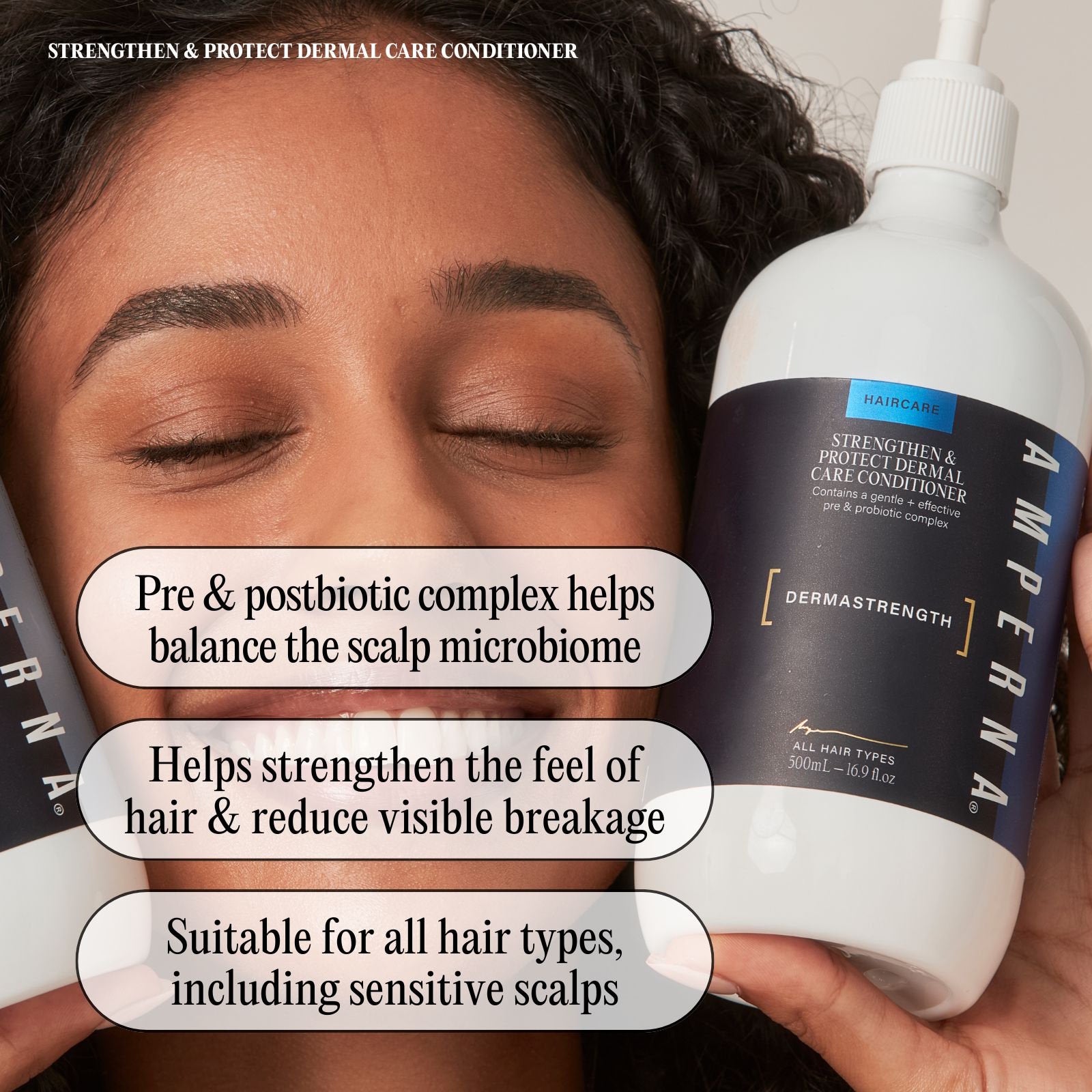
Our Haircare Duo was developed to gently cleanse and condition while supporting a healthy scalp environment.
Explore:
- Cleanse & Rebalance Dermal Care Shampoo [DERMACLEANSE]
- Strengthen & Protect Dermal Care Conditioner [DERMASTRENGTH]
When your skin is feeling sensitive or reactive, remember that everything in your personal care routine should be barrier-friendly.
Can You Prevent Skin Barrier Damage?
While you can't avoid every environmental stressor, there are simple habits that can help support your skin barrier every day.
✔ Avoid over-exfoliating
✔ Introduce active ingredients gradually
✔ Use gentle cleansers
✔ Moisturise daily
✔ Wear sunscreen
✔ Stay hydrated
✔ Support your skin microbiome
✔ Keep your skincare routine simple
Final Thoughts
Healthy-looking skin starts with a healthy skin barrier.
Whether your skin feels dry, sensitive, reactive or simply "not quite right", taking a step back and supporting your skin's natural barrier can often make a noticeable difference.
At AMPERNA®, we've always believed skincare should work with your skin - not against it.
By supporting your skin barrier, respecting your skin microbiome and choosing gentle, effective formulations, you can help your skin feel calmer, stronger and more resilient every day.
References:
Skin explained - Better Health Channel
Skin Barrier Function and How to Repair and Care for It (healthline.com)
Understanding Your Skin Barrier (and how to keep it healthy) (beverlyhillsmd.com)