Seeing your child experience dry, irritated or uncomfortable skin can be difficult as a parent.
Children’s skin is delicate and still developing, which means it can sometimes be more sensitive to environmental factors, skincare products and everyday irritants.
Dermatitis is a common skin concern that affects children of all ages. It can appear as dry patches, redness, itching, irritation or sensitive areas of skin that require extra care and attention.
While every child’s skin is different, creating a gentle skincare routine that supports the skin barrier can be an important step in helping maintain comfortable, healthy-looking skin.
At AMPERNA®, we believe that caring for sensitive skin starts with understanding how the skin works - including the important relationship between the skin barrier and the skin microbiome.
What is Dermatitis?
Dermatitis is a type of eczema that causes inflammation and irritation to the skin. The terms dermatitis and eczema are often used interchangeably. There are several types of dermatitis which include atopic dermatitis, contact dermatitis, perioral, periocular and seborrheic dermatitis (cradle cap).
Atopic Dermatitis
This is the most common type of dermatitis affecting babies, toddlers and young children. It usually starts in infancy or early childhood, sometimes it is due to our gene type and other times caused by external factors. Symptoms can appear when the immune system goes into overdrive, triggered by something in the child’s environment.
Symptoms include:
- Itchy skin
- Redness and rash
- Skin that is very dry or scaly
- Open, crusted or weepy sores
These symptoms usually start on the face or on the elbows and knees. It may then spread to other areas of the body. If the sufferer continues to scratch or rub their skin, the skin may become thicker and, in some cases, it can become infected and small bumps with pus appear on the surface.
The treatments for atopic dermatitis will depend on the severity of each case. Common treatments are topical medications; phototherapy, a form of light treatment; or prescribed immunosuppressant drugs from your doctor.

Contact Dermatitis
Contact dermatitis is a skin reaction from contact with certain substances in the environment that your child may be allergic to. The three most common types are irritant, allergic and contact urticaria (hives).
- These cause direct skin irritation and inflammation. They are the most common cause of contact dermatitis. It can develop very quickly when the skin touches an irritating chemical that breaks through the skin barrier and causes inflammation.
- These cause the body's immune system to have an allergic reaction. The body releases defense chemicals that cause skin symptoms that normally take a few days to appear.
- Contact urticaria, also known as hives, is less common. Symptoms, which usually appear immediately after the skin is in contact with the source of irritation, include swelling and redness. These symptoms usually do not last long. In very rare cases, there is a serious risk of an anaphylactic reaction (a severe allergic reaction that causes the throat to swell, chest tightness).
Common causes of contact dermatitis:
- The environment (extreme temperature and humidity).
- Allergy-producing chemicals including metals (nickel & cobalt allergy is extremely common among adults and children as well as chromium salts), fragrances (found in cosmetics, perfumes & some foods), Antibacterial ointments such as neomycin and bacitracin and Formaldehyde (a preservative)
Perioral Dermatitis
This is an inflammatory rash occurring around the mouth, nose, chin and eyes. The name literally means peri (around) oral (the mouth). The rash is made up of small bumps, is usually red in people with light skin and flesh-coloured in people of colour. It typically causes dry, flaky, scaly skin, and may involve itching.
For this condition to develop, several triggers may be to blame:
- It often starts as the ‘side effect’ when topical steroid medication is prescribed for an unrelated rash or skin irritation such as pustular acne. If the medication is used too frequently or misused then stopped, topical steroid addiction/withdrawal can occur. This is sometimes referred to as ‘red skin syndrome’.
- The use of antifungal creams on the face.
- Other initiating factors include corticosteroid eye drops, nasal sprays or “preventer” asthma inhalers.
- Allergies to Fluoride, Sodium Lauryl Sulfate (SLS) and Sodium Lauryl Ether Sulfate (SLES)
Periocular Dermatitis
This type of dermatitis occurs on the skin around the eyes.
The symptoms are small red scaly papules and pustules.
This skin condition can be caused by:
- An impaired skin barrier – there is an association between atopic dermatitis and periocular dermatitis
- Disturbance of follicular microflora
- Alteration of the pilosebaceous unit (the structure consisting of hair, hair follicle, arrector pili muscle and sebaceous gland)
Common Triggers That May Affect Children’s Sensitive Skin
Every child is different, but some common factors that may contribute to skin irritation include:
Weather Changes
Cold weather, dry air and seasonal changes can affect skin hydration and comfort.
Heat and Sweat
Warm environments and sweating may contribute to skin feeling irritated, particularly in areas where moisture collects.
Bathing Habits
Long, hot baths or frequent washing may contribute to dryness for some children.
Skincare Products
Some products containing fragrances, harsh cleansing agents or unnecessary additives may not be suitable for sensitive skin.
Clothing and Fabrics
Certain fabrics, particularly rough materials, may feel uncomfortable against sensitive skin.
Laundry Products
Fragranced detergents and fabric softeners may be irritating for some children.
Understanding your child’s individual triggers can help create a more personalised skincare routine.

Three Ideas to Help Manage Your Child’s Dermatitis
Patch tests
Conducting a patch test is a useful way to help diagnose allergic contact dermatitis. The test is done by a doctor who puts selected chemicals on an adhesive patch and applies to the skin for 48 hours. After this time the doctor removes the patches and looks at the skin for reactions such as inflammation. This is a common way to confirm if a particular chemical is to blame and it can then be avoided.
Soothing creams
AMPERNA® is helping many families with their children's dermatitis through the use of soothing products specifically designed for sensitive skin. While all of our products are formulated with adults in mind, many parents have helped their children with our Lightweight Soothing+ Emulsion and our Probiotic+ DS Soothing Serum bundled into our Soothing Duo.
- Lightweight Soothing+ Emulsion is cationic, so it absorbs deeply into the skin rather than leaving an oily or shiny film.
- Probiotic+ DS Soothing Serum is deeply restorative and helps soothe irritated skin and calm redness. The copper and zinc gluconates help to limit the spread of harmful bacteria and replenish the skin barrier.
Caring for Your Child’s Skin Beyond the Face
When supporting children with sensitive skin or dermatitis-prone skin, it is important to remember that skin concerns are not limited to the face.
The products that come into contact with the body, scalp and hair can also play an important role in maintaining skin comfort.
Many families focus on facial skincare but forget that everyday products such as body washes, lotions and haircare products can also impact sensitive skin - particularly in children who may be prone to dryness or irritation.
At AMPERNA®, we believe that every step of a personal care routine should be designed with sensitive skin in mind.
Gentle bodycare for sensitive skin
The AMPERNA® BODYCARE range was created to support dry, sensitive and easily unsettled skin from head to toe.
The Hydrating Gentle Wash with Ceramides provides a gentle, non-stripping cleanse to help remove impurities while supporting skin comfort.
The Hydrating Gentle Lotion with Ceramides helps replenish hydration and support the skin barrier, leaving skin feeling soft, nourished and comfortable.
Together, they create a simple bodycare routine designed to help maintain hydrated, healthy-looking skin.
Key ingredients including ceramides, colloidal oatmeal, lactic acid and microbiome-supporting ingredients help support the skin barrier while providing gentle daily care.
Don’t forget the scalp and haircare routine
For children with sensitive skin, it is also worth considering the products used on the scalp and hair.
Shampoos and conditioners can come into contact with the face, neck and body during washing, so choosing gentle formulations can be an important part of creating a skin-conscious routine.
The AMPERNA® Haircare range was developed using the same microbiome-focused philosophy as our skincare products.
The Cleanse & Rebalance Dermal Care Shampoo gently cleanses while helping support a comfortable, balanced-looking scalp.
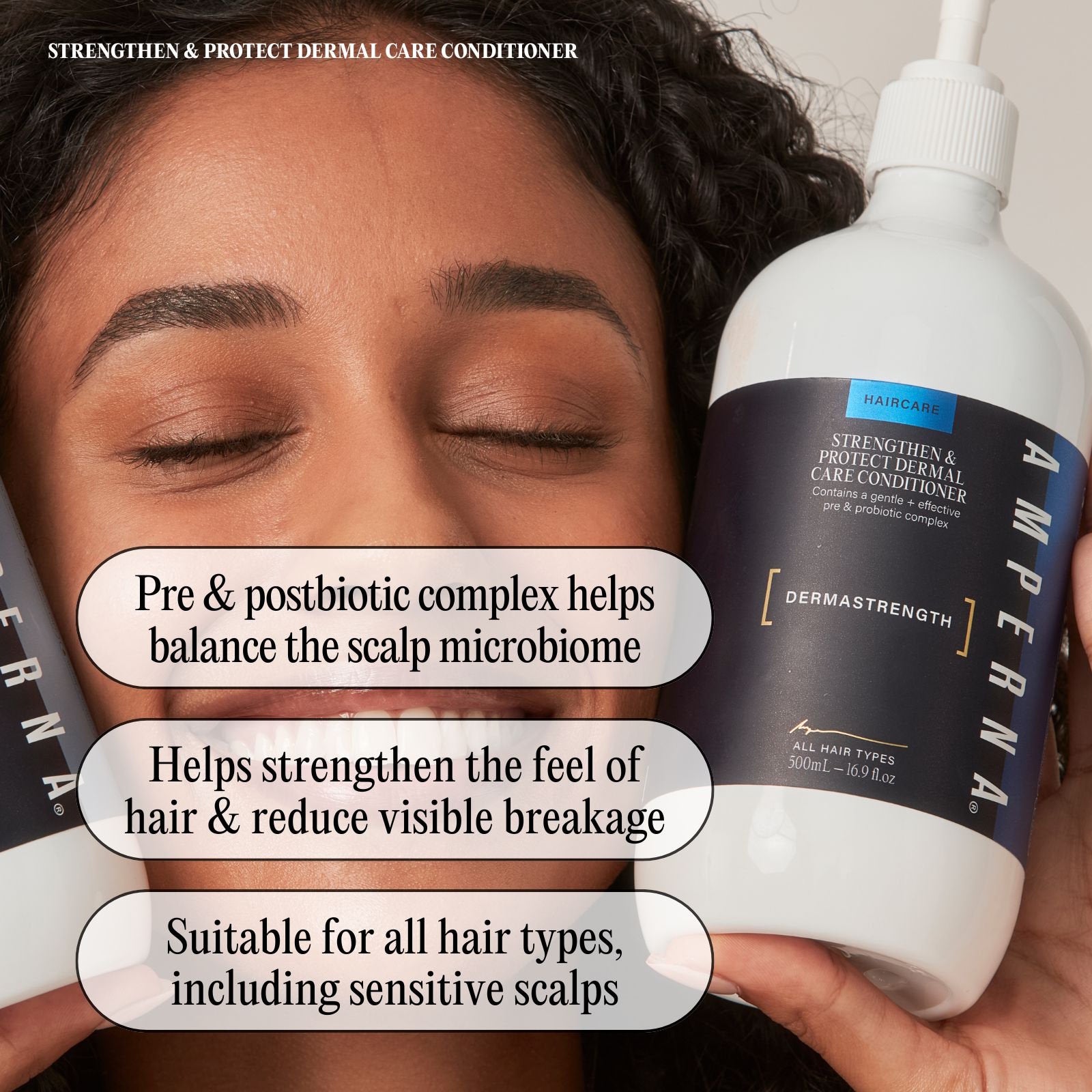
The Strengthen & Protect Dermal Care Conditioner helps hydrate, soften and condition hair while supporting a healthy-looking scalp environment.
By considering the entire personal care routine - from skincare to bodycare and haircare - families can create a more supportive approach for sensitive skin.

Diet
The foods your child eats can play a role in supporting overall skin health and wellbeing.
While diet alone does not cause dermatitis, some children may notice that certain foods appear to worsen their skin symptoms. Food sensitivities and allergies can sometimes be associated with eczema or dermatitis flare-ups, particularly in younger children.
Every child is different, which means there is no single “dermatitis diet” that works for everyone. It is important to look at your child’s individual response and speak with a healthcare professional before removing major food groups from their diet.
Some children may benefit from limiting or avoiding foods that they personally react to, while others may find that focusing on a varied, nutrient-rich diet helps support their overall skin health.
Some children with dermatitis may have sensitivities to specific foods. Common foods that may be investigated in children with eczema or dermatitis include:
- Dairy
- Eggs
- Soy
- Wheat
- Nuts
- Seafood
However, these foods should not be removed without professional guidance, as unnecessary restriction can impact a child’s nutrition and growth.
Keeping a food and symptom diary can sometimes help identify patterns between certain foods and changes in the skin.
Ultimately, supporting children with dermatitis involves looking at the bigger picture - including skincare, lifestyle, environmental factors and nutrition. A gentle skincare routine combined with a balanced diet can help support your child’s skin from the inside and outside.
"These products have made a huge difference to my skin and I was also able to safely use them to treat a rash on my baby's face in consultation with Kiri." Louise, Sydney
Go to https://amperna.com/ for more information.
Sources:
https://nationaleczema.org/eczema/types-of-eczema/contact-dermatitis/
https://www.webmd.com/skin-problems-and-treatments/eczema/features/soothe-baby-eczema#1
https://www.medicinenet.com/atopic_dermatitis_vs_eczema/article.htm
https://dermnetnz.org/topics/periocular-dermatitis/